
Despite ongoing algorithm updates and the evolution towards complex AI Overviews, meta tags remain one of the most important constants in SEO. They act as the crucial interface between content and the algorithms of search engines like Google or Bing. As a technical remote control, they determine how a page is interpreted and presented in search results.
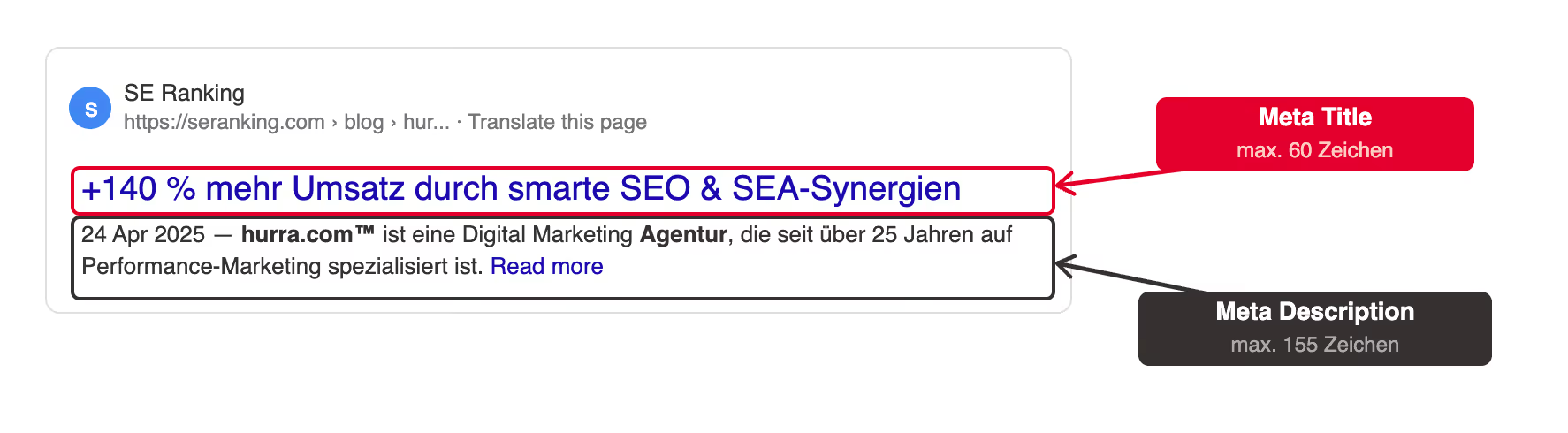
Precise optimization of these signals ensures that content remains readable for crawlers and that snippets achieve a high click-through rate (CTR). This guide explains how meta tags are used today to control visibility and sustainably increase the conversion rate directly within search results, as it should be a central component of any professional SEO strategy.
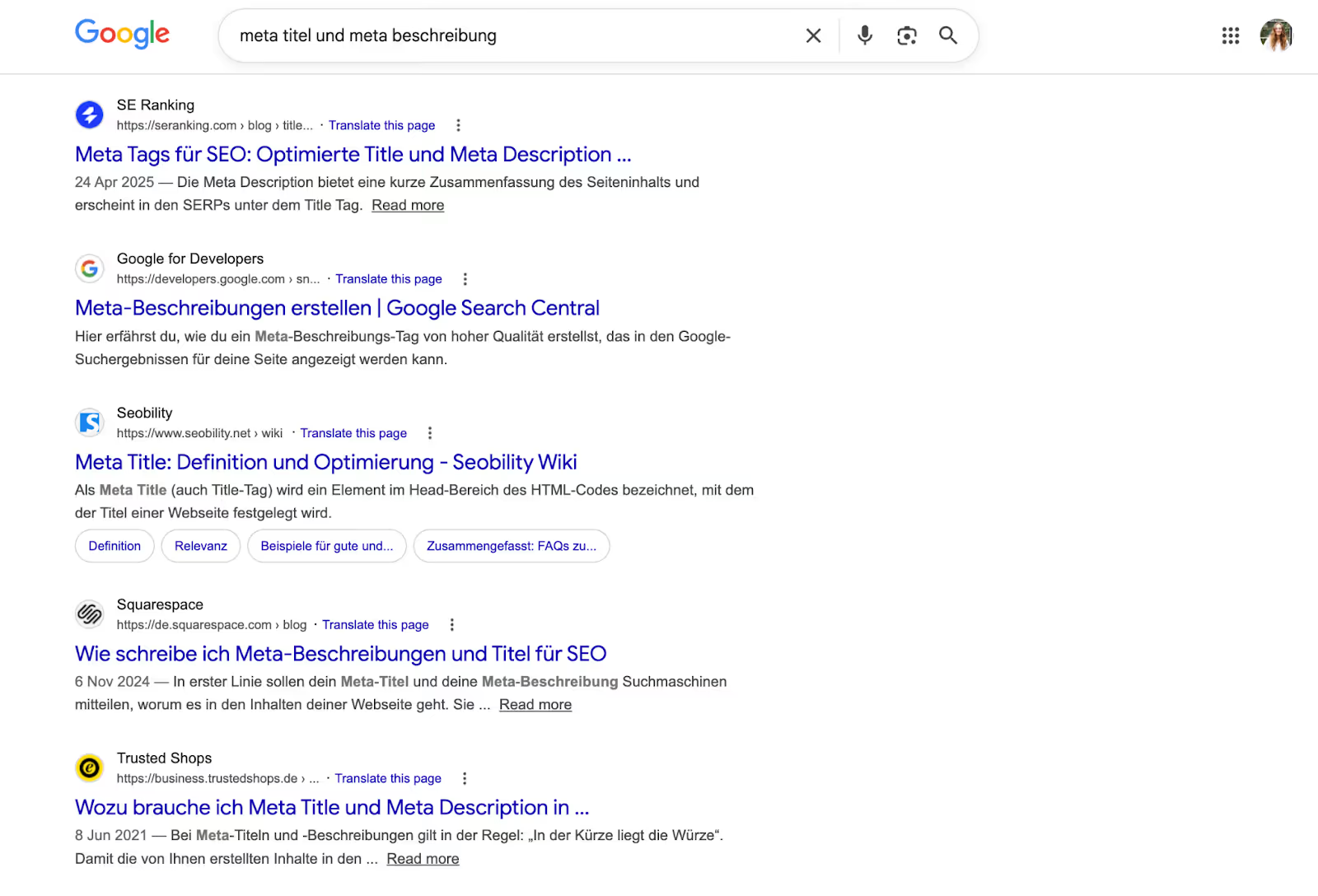
What are SEO Meta Tags? Definition and Function
Meta tags are text snippets within a website's HTML code that provide structured information about a page's content to search engines and browsers. They are placed in the <head> section of the document and are not directly visible to visitors on the website itself.
Invisible Code with Tangible Impact
Although these tags operate in the background, their influence on the Search Engine Results Pages (SERPs) is significant. They largely determine how a business is presented in search. A precisely optimized meta section serves as the first point of contact for potential customers, as it determines whether a user clicks on or skips a search result. In a data-driven strategy, optimizing these tags is the first step to controlling the click-through rate (CTR) and thus performance directly within the search engine.
The "Big 3" of Meta Optimization: Title, Description, and Robots
While numerous meta elements exist, three factors form the backbone of any on-page strategy to specifically influence visibility and indexing.
The Meta Title: A Central Ranking Factor
The title tag is considered the most important on-page element. It appears as the headline in search results and in the browser tab. For optimal display, it should be between 50 and 60 characters long. If it's shorter, potential is wasted; if it's longer, it will be truncated in the SERPs. The main keyword should be placed as far to the front as possible.
What many also underestimate: Search engines independently rewrite titles if they don't precisely match the search intent. Regular checks in Search Console are therefore best practice. Additionally, Google increasingly truncates brand names at the end of the title tag, which is why it's worth regularly validating whether your own brand still appears in full.
Pro Tip: The title tag can be dynamically changed and animated via JavaScript after the page loads, which is directly displayed in the browser tab. This can attract attention but should be used sparingly.
The Meta Description: The Lever for Click-Through Rate (CTR)
The meta description is not a direct ranking factor, but it significantly determines whether a user clicks or scrolls. It is therefore the most important conversion element even before someone visits your website.
A good description concisely summarizes the page content, includes a clear call-to-action, and should be between 150 and 155 characters long. Active verbs like "Discover now," "Learn more," or "Compare directly" noticeably increase the click-through rate because they signal to the user what to expect.
An often overlooked advantage: Google automatically bolds the searched keyword in the meta description. This makes your result in the search listings visually more relevant. This is a good reason to naturally include the main keyword early in the description instead of placing it at the end.
Meta Robots: The Remote Control for the Googlebot
The robots tag is a direct communication with the crawler. It determines how search engines handle a page and how the crawl budget is utilized. Two parameters are central to this:
- index / noindex: Specifies whether the page is included in the search index.
- follow / nofollow: Controls whether links on the page should be followed.
The targeted use of noindex is particularly strategically relevant: Pages without content value (such as internal search results pages, thank-you pages, or thin filter pages in e-commerce) should be excluded from the index. This way, crawling resources are specifically directed to pages that are actually intended to rank. If you are unsure whether your website has already been affected by a penalty, you will find a structured checklist for diagnosis in our Google Penalty Check.
Practical Tip: Validating Snippet Display
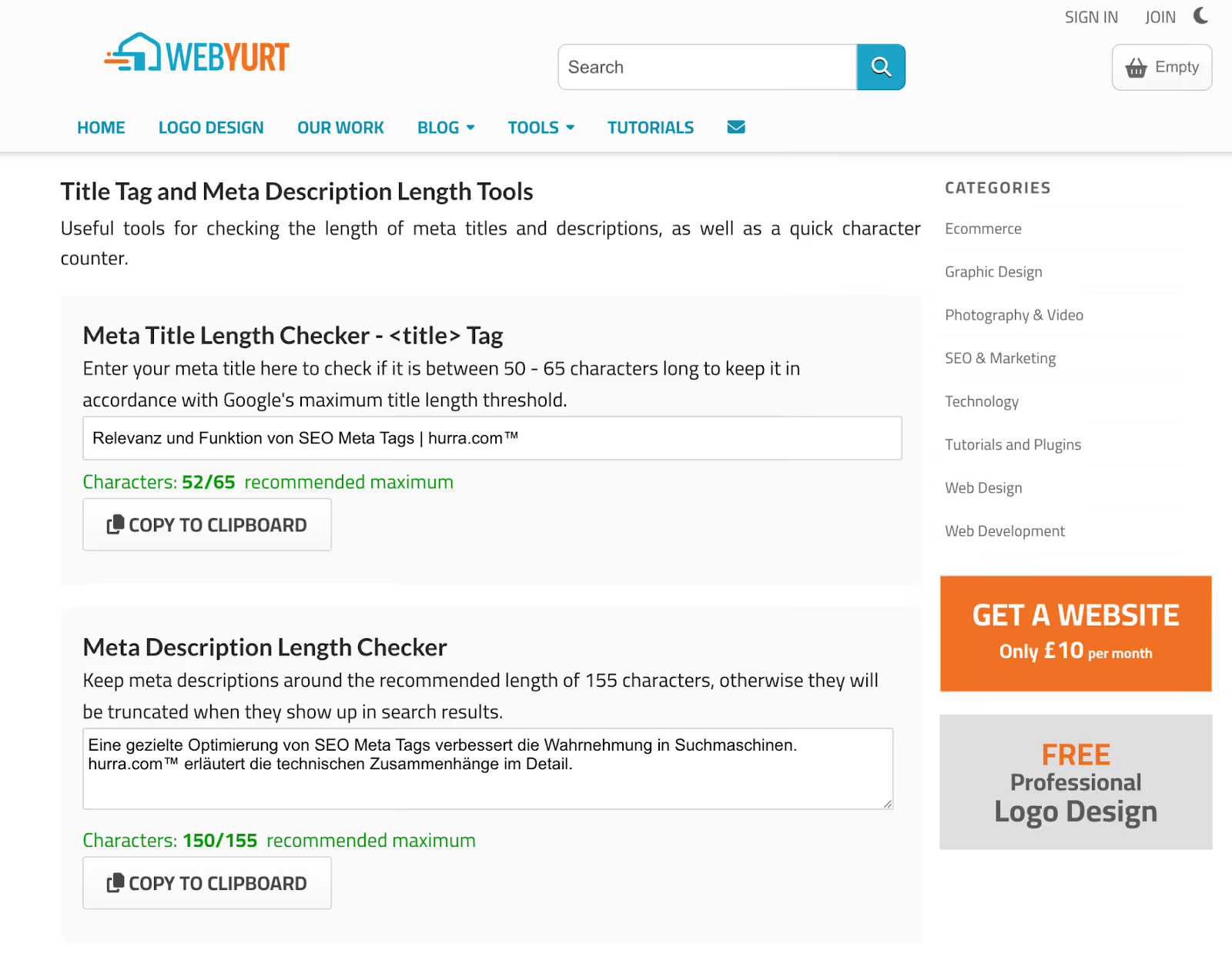
Since letters occupy different pixel widths (a "W" is wider than an "i"), the use of SERP simulators is recommended. These tools visualize in advance whether titles or descriptions will be truncated on desktop or mobile devices. A pixel-based check ensures that the core message and call-to-action remain within the visible area.
Technical Essentials: Viewport and Charset
In addition to content-related meta tags, there are two technical elements that are essential for flawless display and indexing. The viewport tag ensures that mobile browsers correctly scale a website, which is an absolute must in a mobile-first environment. The charset tag (usually UTF-8) ensures that special characters and umlauts are correctly interpreted, which is particularly crucial for clean content indexing in German-speaking regions.
The Future: Meta Tags for AI Overviews and GEO
The digital landscape is increasingly shaped by Generative Engine Optimization (GEO). As Google frequently uses AI to generate answers directly in the search results (SERPs), new meta directives are gaining importance for controlling the use of your content.
Control via max-snippet and nosnippet
Specific directives can be used to determine how search engine AIs handle a page's content:
- max-snippet:[number]: This directive defines the maximum number of characters that Google is allowed to display in a text excerpt or AI snippet.
- nosnippet: This command completely prevents text snippets or video previews from appearing in search results.
These tools allow you to maintain control over your content while ensuring users still have an incentive to visit your website for more detailed information. At hurra.com™, we continuously analyze how these new tags impact visibility and performance in AI Search.
Implementation: Meta Tags in WordPress, Shopify, and more.
The technical implementation of meta data varies depending on the system used, but it follows the same logical principles of structuring.
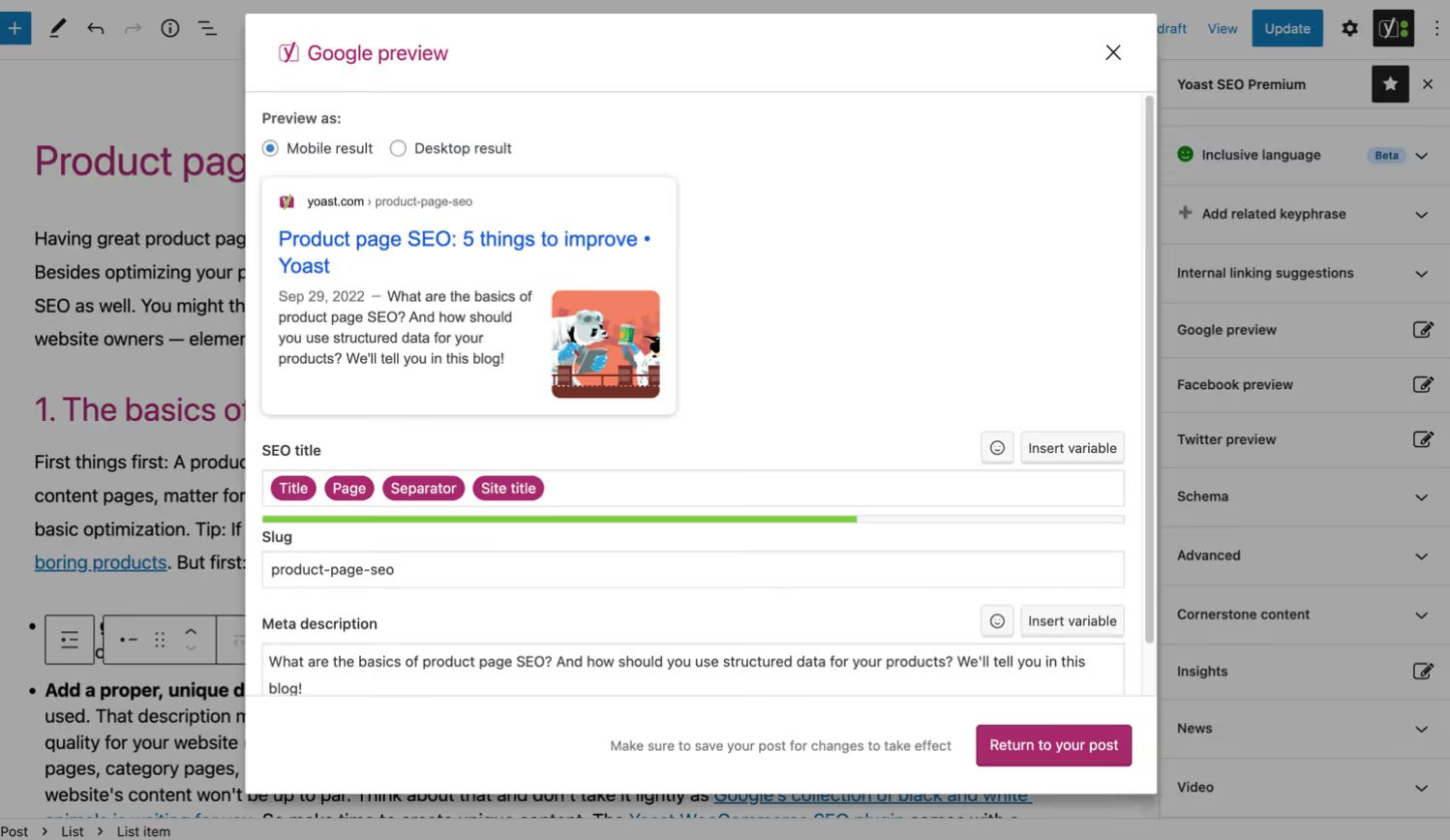
- WordPress: Plugins like Yoast SEO or RankMath handle meta data management without direct code intervention and are considered industry standards.
- Shopify: Input fields for titles and descriptions are directly integrated into product and category pages, significantly simplifying optimization across large product ranges.
- Custom HTML: In custom-developed systems, maintenance is done directly in the source code. Correct syntax and placement immediately after the opening
<head>tag are crucial here.
Common Meta-Data Errors and How to Avoid Them
To avoid compromising a website's technical integrity and performance, the following errors should be prevented during configuration:
- Missing Meta Data: Every indexable page requires individual tags to be correctly categorized by search engines.
- Duplicate Titles: Using identical titles for different pages leads to unclear signals and should be avoided.
- Keyword Stuffing: A string of keywords appears unprofessional and can be negatively perceived by search engines as an attempt at manipulation.
- Outdated Tags (Meta Keywords): Keywords used to be manually embedded in the code. Since this field was often manipulated, Google has completely ignored it for over ten years. Therefore, maintaining it is now superfluous, as search engines automatically interpret content.
Conclusion: Meta Data as Part of a Holistic Performance Strategy
SEO meta tags are far more than a formal necessity. They act as a crucial link between the brand message and the algorithmic evaluation by search engines. In an era where AI-generated answers are fundamentally changing search, precise control of snippets becomes a critical competitive advantage.
To fully leverage the potential of this data, hurra.com™, as an expert in search engine optimization, helps to sustainably increase visibility and click-through rates. Regular insights are available in our insider area, and for a customized strategy for performance optimization or for a Google Penalty Check, we are happy to provide a direct consultation.