
A sudden drop in organic visibility is still one of the most critical scenarios in digital marketing. If the laboriously built up visibility disappears within a few days, there is often a suspicion of a Google penalty in the room. But not every ranking loss is synonymous with manual punishment by the Search Quality Team.
For a well-founded SEO strategy, it is essential that you make a precise distinction between algorithmic reassessments and targeted manual measures. This is often the expertise of a professional Search engine optimization agency needed to use the right levers to sustainably restore performance.
In this guide, I'll show you how to carry out a methodical Google penalty check, which quality standards are a priority today, and how to safely get your domain back into the top rankings.
What is a Google penalty? Definition and delimitation
In the broadest sense, a Google penalty is a negative effect on your website's ranking that results from a violation of Google Search Essentials. Google's goal is to provide users with the most relevant and high-quality results for an optimal search experience. Practices that attempt to manipulate the algorithm are consistently sanctioned.
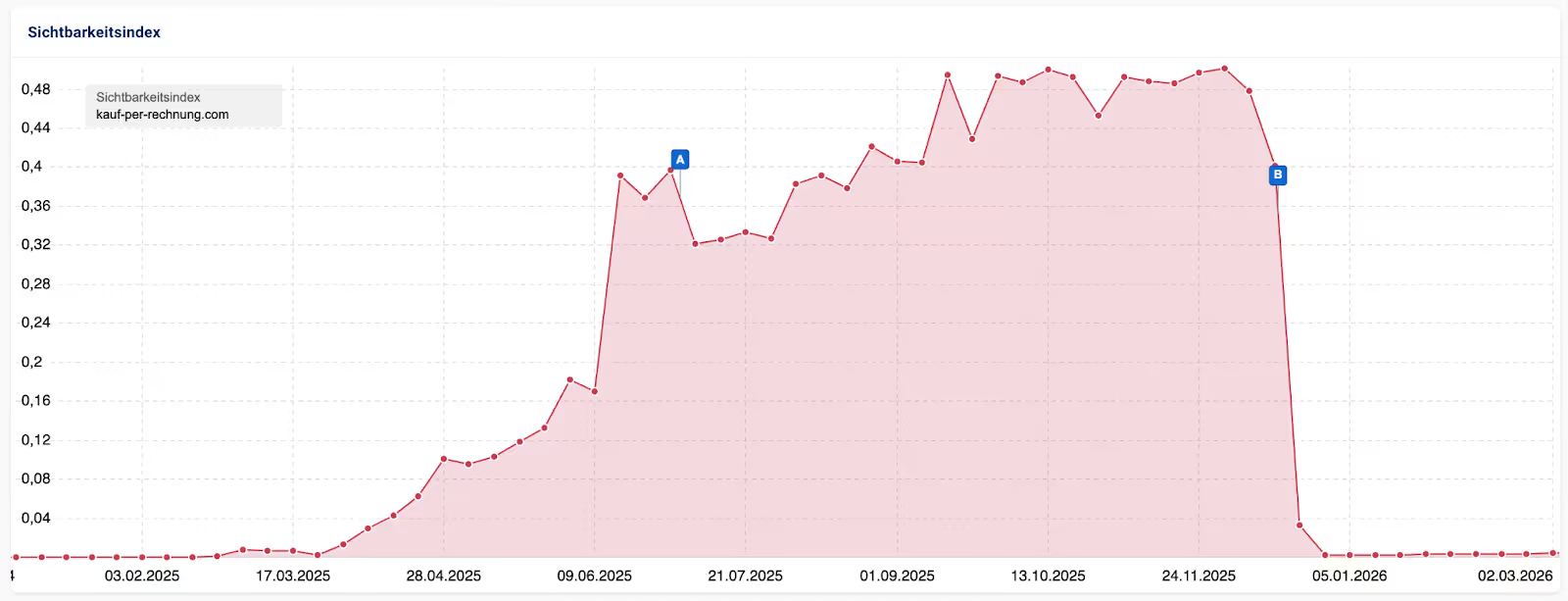
Manual measures vs. algorithmic filters
It is crucial for your strategy to differentiate between two types of negative ranking effects:
- Manual actions: Here, a human reviewer at Google found that parts of your site don't meet the guidelines. These measures are reported to you explicitly in Google Search Console.
- Algorithmic updates: This is not a “penalty” in the traditional sense, but an automated reassessment through systems such as core updates or AI-based spam systems. There is no active notification; your site is losing relevance as systems are now contextually reinterpreting web networking and content.
The difference between a manual penalty and loss of relevance
Not every loss of traffic is a penalty. Google often optimizes its algorithms in order to preferentially display the most helpful content for user intent. In this case, you haven't necessarily done anything wrong, but the competition now meets the E-E-A-T criteria (Experience, Expertise, Authoritativeness, Trustworthiness) better. A comprehensive technical SEO audit helps you precisely isolate the causes and secure your performance in the long term.
Recognize symptoms: How do you recognize a penalty?
A well-founded Google penalty check starts with monitoring your key performance indicators (KPIs). Since manual measures and algorithmic filters can visually resemble each other in traffic flow, you should pay attention to the following specific warning signs:
- Sudden Traffic Drop: A drop in organic sessions of 50% or more within a very short time is often the first sign.
- Loss of Brand Rankings: If your website no longer appears in position 1 even for your own brand name, this usually points to a severe manual action.
- De-Indexing: Entire directories or the complete domain disappear from the Google index. You can check this using a
site:domain.dequery in search. - Visibility Drop After Updates: A massive dip in the visibility curve that correlates chronologically with an official Core Update points towards an algorithmic reassessment of your content.
However, the primary point of contact for verification is always Google Search Console. Only there will you receive confirmation as to whether a human reviewer has actively intervened as part of a manual measure. In all other cases (and this is the majority of scenarios), the cause is Google's automated reassessment of your search experience. This usually happens as a result of a core update, in which the algorithms rebalance the relevance and quality of your content compared to the current market environment.
The Google Penalty Check: Step-by-Step Analysis
In order to gain clarity about the causes, you should be methodical. Hasty, panic-like changes to content or backlink profiles often worsen the situation as they falsify the data for root cause analysis.
1. Google Search Console status check
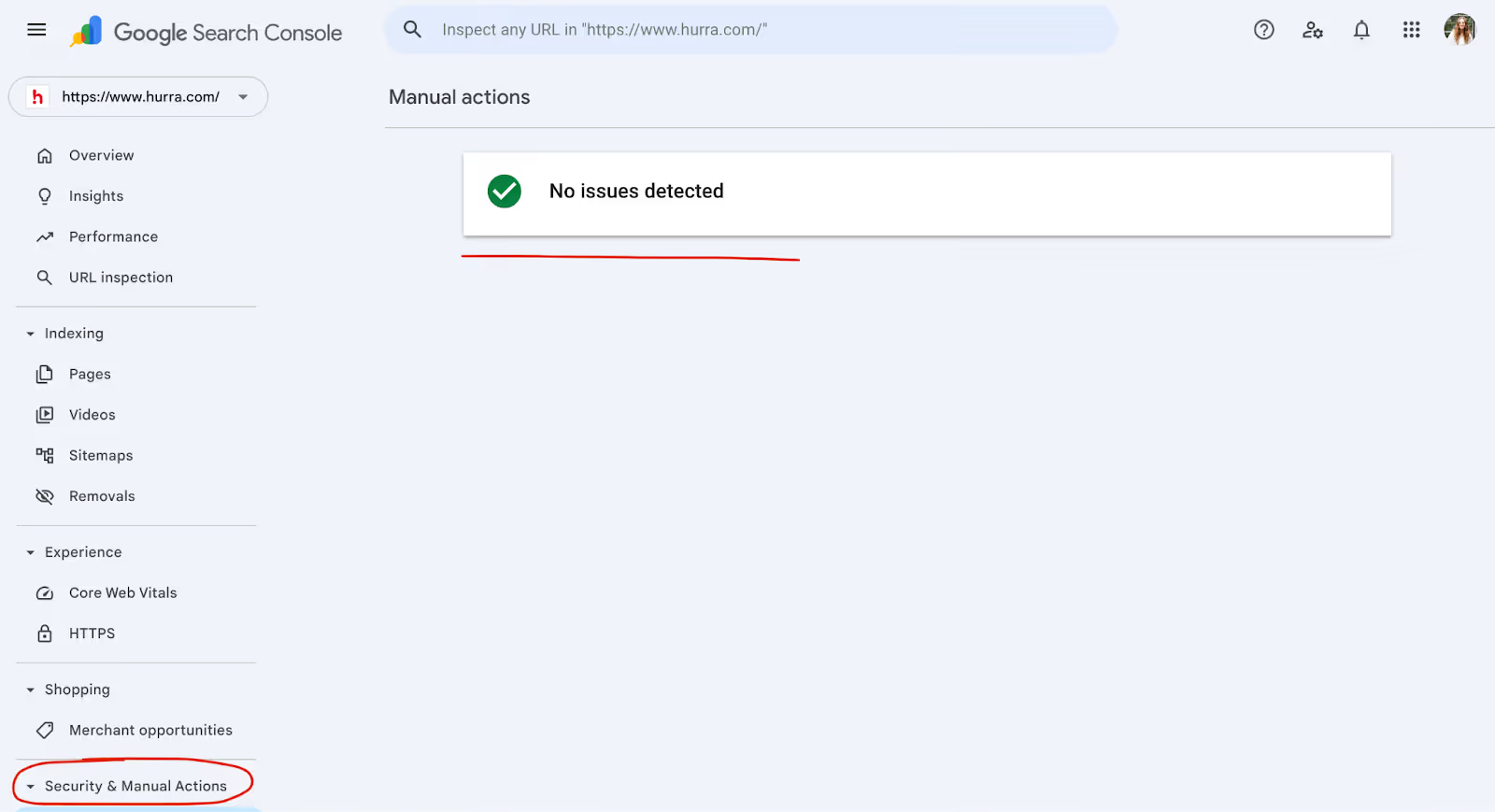
Your first route is always to Google Search Console (GSC). Under the “Security & Manual Actions” tab, you will find the key item “Manual Measures.”
- Green check mark: There is no manual punishment. It is highly likely that any loss is algorithmic.
- Warning message: Google will tell you the specific problem here (e.g. “unnatural links to your website”). In this case, you must take targeted action to restore compliance with the guidelines.
2. Analysis of visibility index and traffic drops
If the GSC doesn't report any errors, you'll need to use external data to identify the performance gap. To do this, compare the exact time of your traffic loss with the calendar of official Google updates.
To do this, also check your paid channels (SEA): Are your ads still running stably while only organic clicks are falling? If so, that is a clear indication of an SEO-specific problem. If both channels break down at the same time, the cause is often seasonal trends or technical errors in tracking rather than a penalty.
Note that an algorithmic filter such as the system for evaluating helpful content often strikes with a time delay and creeping, as Google now contextually evaluates the entire search experience.
Common causes of Google penalties in 2026
As soon as you have identified the time correlation with an update or a specific channel drop, it's time for detailed analysis. The requirements for technical and content excellence have risen steadily in recent years. Google today uses sophisticated, AI-based systems such as SpamBrain to identify manipulative tactics in real time.
Three main causes will emerge in 2026:
Unnatural backlinks and Penguin's legacy
Although Google is now more efficient at simply ignoring low-quality spam links, aggressive link buying strategies or private blog networks (PBNs) still result in tough manual measures. A toxic backlink profile remains one of the main causes of long-lasting loss of visibility. For a natural backlink profile, a realistic mix of attributes of sponsored, ugc and nofollow is therefore crucial.
Scaled content abuse and AI spam
Since the groundbreaking core updates of recent years, Google has been taking maximum action against so-called “scaled content abuse.” Websites that publish tons of low-quality texts (often purely AI-generated and without editorial review) lose massive traffic. Nowadays, quality, real added value and a clear user intent are the decisive factors for your success.
Site Reputation Abuse (Parasite SEO)
Site Reputation Abuse is a strictly sanctioned phenomenon. Third parties use the high authority of a foreign domain to host their own, often off-topic content there. Google consistently punishes this “sub-domain lease” as it undermines the trustworthiness of search results. Control over your own domain authority is therefore more important than ever to keep your brand visible in the new era of trust.
The recovery process: How to regain your visibility
As soon as the diagnosis is established, the structured recovery process begins. This requires patience and precision, as panic-like corrections can often destroy valuable signals.
The link audit and disavow file
Link penalties require you to thoroughly analyze your entire backlink profile. Identify toxic sources and try to have them actively removed first. If this does not work, the disavow tool is the last resort. In doing so, you provide Google with a list of URLs that should be ignored when evaluating your site in the future. In the long term, however, a natural backlink profile is more likely to be created by a realistic mix of attributes such as nofollow, sponsored and ugc.
Content audit and E-E-A-T optimization
When it comes to algorithmic breaches, increasing content quality is the only choice.
- Eliminate thin content: Remove or improve content that doesn't add real value.
- Strengthen author expertise: Strengthen your author profiles to make the technical history behind the texts verifiable.
- Operate user intent: Make sure that your content meets users' search intent precisely and contextually.
- Quality check: Critically evaluate each source according to E-E-A-T criteria (Experience, Expertise, Authoritativeness, Trustworthiness).
Make the Reconsideration Request
If you have fixed a manual measure technically and in terms of content, you must actively inform Google about it. A successful recovery request should:
- Identify the identified problem precisely.
- Document the remediation steps taken in detail.
- Assure that Google guidelines will be consistently complied with in the future.
Prevention: How to avoid future penalties
The best Google penalty check is the one you don't even need. In 2026, a sustainable SEO strategy focuses on proactive quality assurance instead of reactive damage limitation:
- Continuous monitoring: Keep an eye on your GSC data and visibility indices weekly so that you can react immediately to unusual fluctuations.
- Quality over quantity: Invest in high-quality content that consistently follows E-E-A-T principles and offers real added value to the search experience.
- Natural link building: Focus on organic growth and clean management through link attributes such as sponsored or ugc, instead of risky abbreviations.
- Technical SEO: Avoid manipulative tactics such as hidden texts or cloaking. A clean technical foundation is a prerequisite for Googlebot to correctly interpret your site.
Conclusion: Data-based recovery instead of panic
A Google penalty or an algorithmic loss of visibility isn't a permanent verdict for your site. Through a clean, data-based analysis of the causes and consistent implementation of corrective measures, the trust of the search engine can be regained in the long term.
Whether it's a manual measure or a core update, the key lies in the professionalism of implementation and the understanding that Google is increasingly interpreting links and content in a contextual way today.
If you need help to analyze your case, with Indexing a website or need a comprehensive SEO audit, we are happy to help you take your strategy to the next level. Just send us a message or check out our blog for more future-proof optimization options.