
More data doesn't make performance better—it makes it less secure
Many forecasts are published at the beginning of the year. New trends, new tools, new buzzwords. A lot of it isn't fundamentally wrong, but surprisingly little of it helps with real decisions. I'm interested in something else: Which topics will actually have an impact in 2026? And what certainties should we consciously leave behind, even if they feel familiar?
In my opinion, 2026 won't be a year for more channels, more data or more automation gain. It will be a year that decides who correctly understands impact — and who will continue to rely on models that no longer match reality.

1. More data doesn't make performance better—but less secure
Paradoxically, the more data we have available today, the greater the uncertainty. Not because tracking has gotten worse, but because we're still measuring impact as if it were linear, unambiguous, and causally attributable.
Search, social, video, CTV, AI discovery, and CRM work simultaneously. The last click is often only the most visible moment of a much longer decision-making process, not its cause. Performance doesn't optimize for truth.
This exact question has been on our minds for a long time: Which KPI is actually the right one and how safely can you optimize for it? For us, the decisive step was a reliable decision-making model based on figures, data and facts, not gut feeling.
2. The promise of complete measurability has finally been broken
GDPR, iOS restrictions, browser limits, and the withdrawal of third-party tracking have made a large part of the signals structurally inaccessible. The idea of a complete “single source of truth” presupposes that all touchpoints are observable and causally linkable — this is not the case today, either technically or in regulatory terms.
Effects also occur where we can no longer directly observe them. This is precisely why measurement and decision models must change. As a result of this need, we developed OwaPro™: aggregated, model-based, relevant to decisions.
3. More information rarely leads to better decisions
One idea from decision research stuck with me in particular: In an experiment, the hit rate remained constant despite increasing information — the certainty in one's own assessment increased. More information led to more self-confidence while maintaining quality. We see the same thing in marketing. The turning point is not in more metrics, but in different ways of thinking.
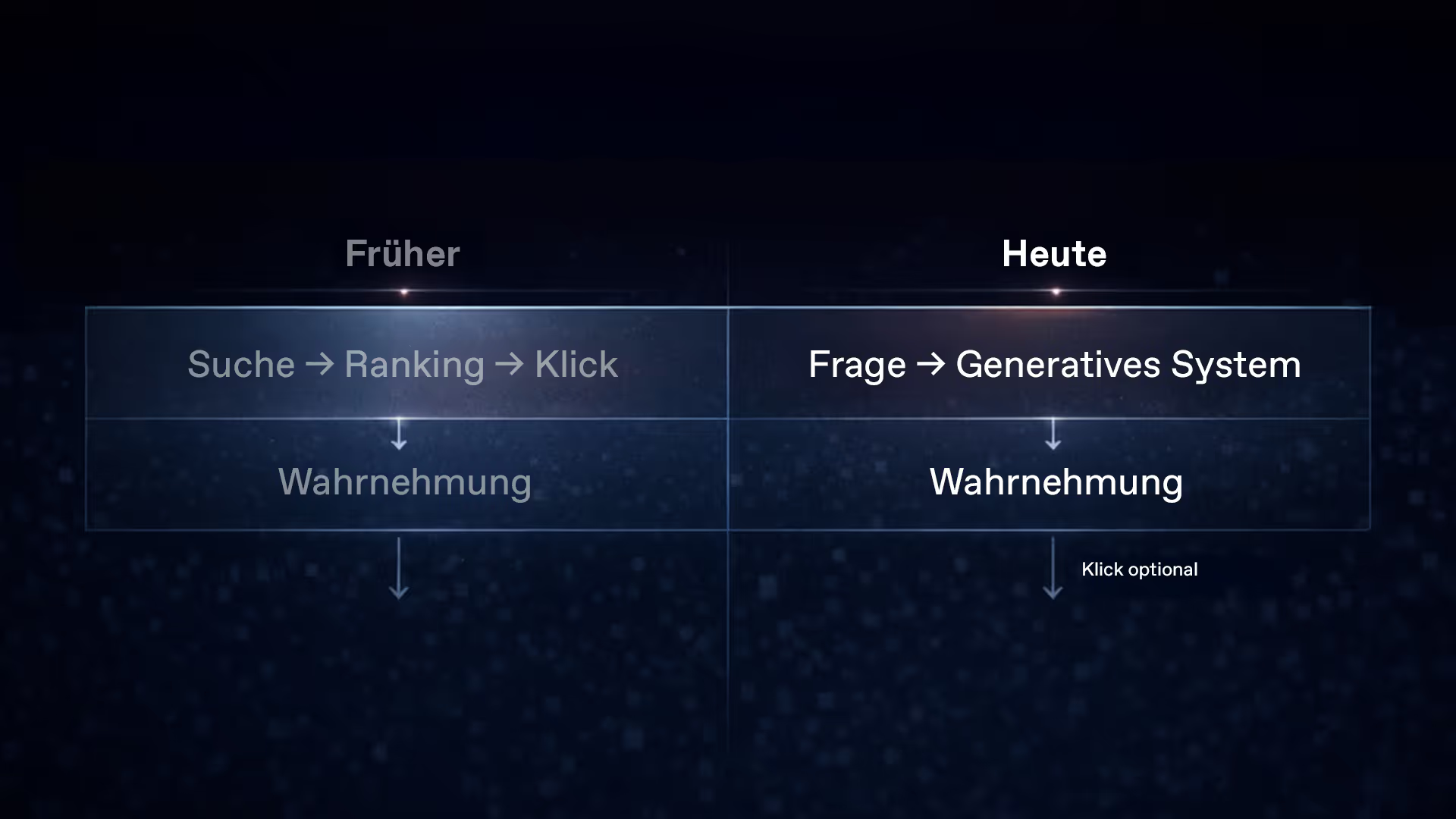
4. Visibility is created today before the click — not in the ranking
Discovery has changed. People get answers before they click. Generative systems implicitly decide which brands are actually mentioned. It is no longer the ranking that decides, but whether a brand is understood and classified as relevant.
That is why we no longer regard visibility as a pure SEO issue. GEO, entity structures and AI search optimization are upstream performance services — long before traditional channels take effect.
5. GEO is not an SEO trend, but the basis of performance
Generative systems work based on entities and contexts. They value consistency, trust, and recognizability. Once this structure is in place, behavior changes throughout the funnel: Brand search increases, paid channels become more efficient, demand is triggered earlier. Not because someone clicks, but because someone understands first.
6. Brand is the most important performance lead
Marketing has a temporal, cognitive and emotional effect. Brand performance works like learning: Repetition builds mental availability. These effects have a delayed effect. If you only measure it by immediate click, you are measuring at the wrong point. Brand is not an antithesis to performance, brand is its prequel.
7. Platforms are right internally — but not for the entire business
Platforms optimize excellently within their own system. Within that logic, they're right. It becomes problematic when this internal truth is confused with company-wide reality.
Platforms answer the question of what contribution they had. Companies must answer what would have happened without them. These perspectives must be classified — this is exactly what superordinate decision logic is needed, such as the one we have with hurra.ai.
8. Performance is expensive when it optimizes for false signals
Not every click is human. Not all traffic can convert. Distorted signals cause algorithms to learn behavior that never generates revenue. The result is rising costs and incorrect creative reviews.
It is therefore essential to consistently keep non-human or non-convertible traffic out of decision models — including with AdsDefender.
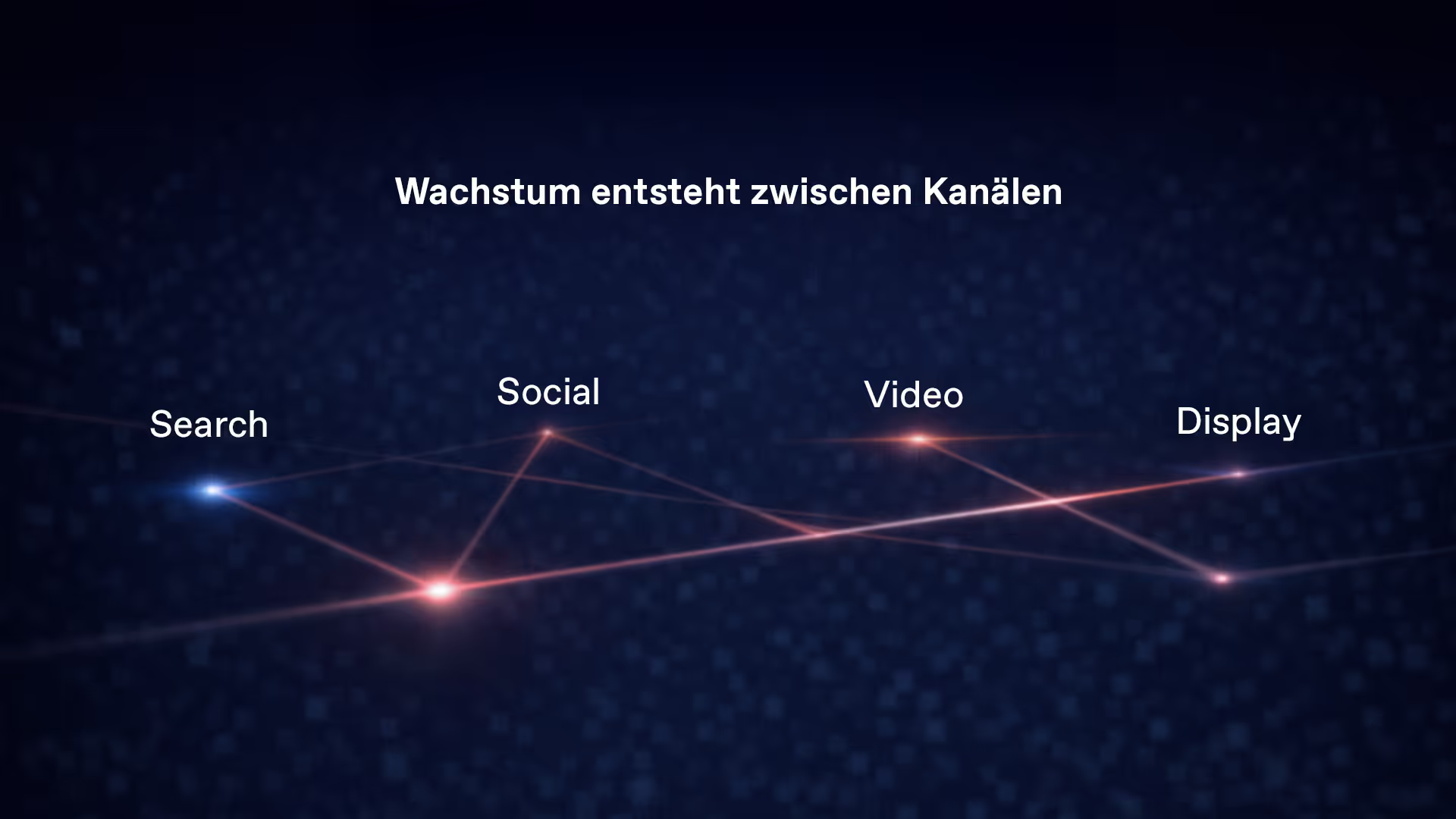
9. Growth happens between channels — not within a single channel
Performance is often thought of as channel-centered. However, demand is created between channels. Small, controlled budget shifts have enormous potential. Campaigns often perform better when budgets are deliberately limited because saturation effects are otherwise overlooked.
This can only be achieved systematically with reliable impact models and an operational decision logic that separates goal and implementation.
10. Creative is today's biggest performance lever
Optimize platforms for user experience. Bad creatives don't make performance worse, they make performance expensive.
AI is fundamentally changing this part of the system. Advertising material can be produced, varied and exchanged quickly. Creative goes from a campaign asset to the operational input of a performance system. When Creative doesn't scale, performance only scales costs.
Conclusion
2026 won't be a year for activism. It's going to be a year for Focus. If these topics concern you and ask yourself how to really manage performance under uncertainty, the exchange is worthwhile. That is exactly what we are working on at hurra.com, hurra.ai, OwaPro™ and AdsDefender — not with simple answers, but with reliable decision models.
New year. New game. But only if we're prepared to really let go of old ways of thinking.