


The bonprix geo-lift case
When sales don’t show the full effect: how bonprix used geo-lift to make mid-funnel activation measurable in France.

Mid-funnel campaigns are often judged by short-term sales or conversion effects. That is exactly where the problem often lies: not every relevant campaign effect shows up immediately at the end of the funnel. Brand performance and mid-funnel activity in particular often take effect earlier: in attention, activation, registration or reactivation.
bonprix wanted to know the true incremental contribution of its mid-funnel campaign in Germany, France and Italy, independent of shop attribution alone.
The central question was not only “Does it generate more conversions or revenue in the short term?” but also “Does the campaign measurably activate users further up the funnel?”
To answer that question reliably, Hurra™ set up a geo-lift test with synthetic control. The campaign was deliberately withheld in selected regions. These holdout regions were then compared with synthetic control groups. This made it possible to check whether regions without campaign exposure fell short of their expected trend.
The key difference from standard campaign reporting: the effect was not derived from platform data but assessed through an independent comparison between the actual trend and the modeled expectation.
The conversion and revenue analysis initially showed a mixed picture.
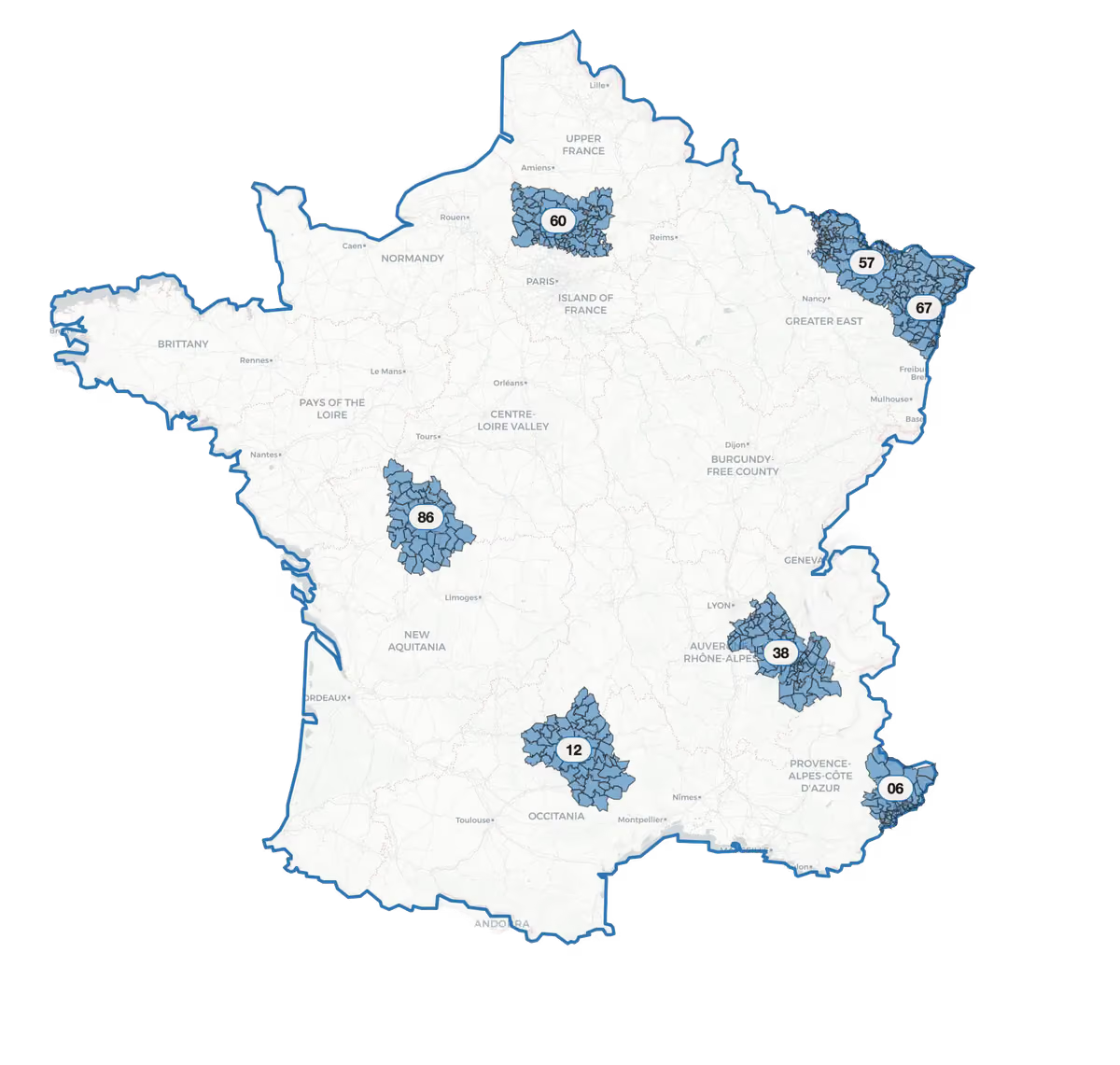
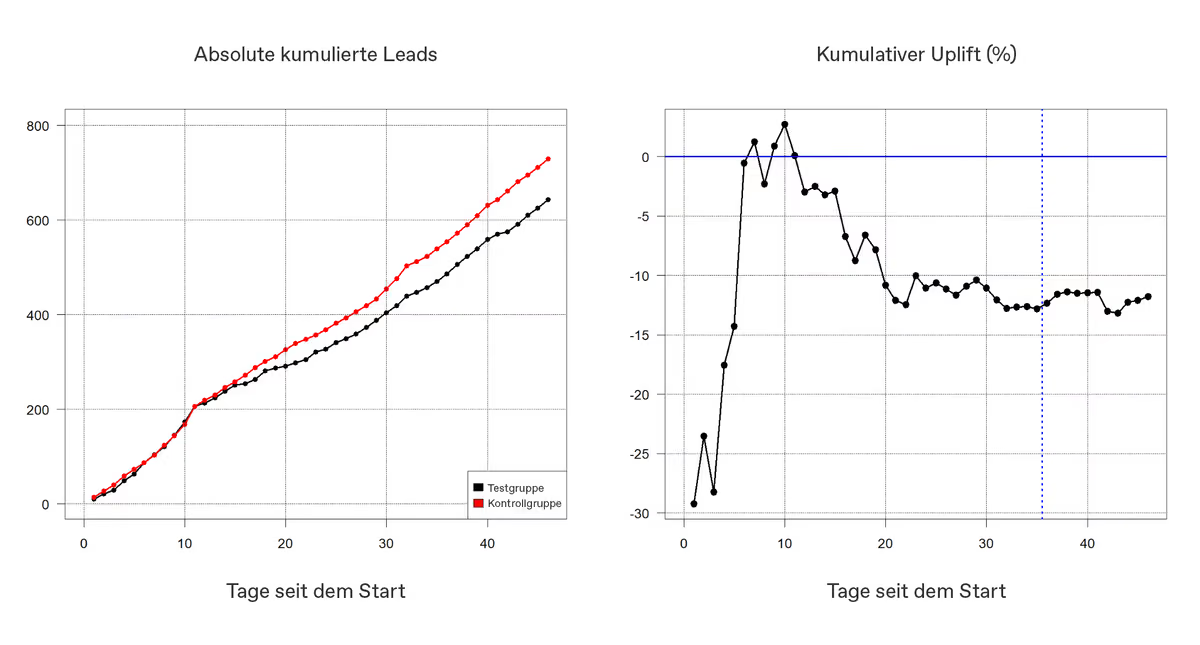
A short-term positive uplift in sales or conversions could not be demonstrated reliably. In a purely transactional assessment, the campaign would quickly have been written off as ineffective. The supplementary analysis of lead and user activation, however, showed a different picture in France. There, the holdout regions fell well short of the expected trend for new or reactivated users.
In the French holdout regions, the number of new or reactivated users was 69 below the expected trend. That corresponds to 12.8% fewer activations at p = 0.01. In a later cumulative analysis, the figure was 11.8%, also at p = 0.01.
Where the mid-funnel campaign was not shown, significantly fewer new or reactivated users were generated. This activation gap is the central signal of impact. The campaign therefore did not show its effect directly at the point of purchase but one step earlier: in the activation of users in the mid-funnel.
The case shows why mid-funnel campaigns should not be judged solely by short-term conversions or revenue. In France, it became clear that the campaign produced a measurable brand performance effect: the results indicate that it activated users further up the funnel, even though this effect was not immediately measurable as additional revenue.
This gave bonprix a more nuanced basis for decisions.
The test showed not only whether the campaign generates sales in the short term but also at which level it actually has an effect. It also became clear that the choice of KPIs and the test design must closely match the expected funnel effect. If a campaign is primarily meant to drive activation, registration or reactivation, those are exactly the KPIs that should be at the center of measuring success.
The most important insight:
Independent incrementality measurement reveals what standard platform reporting or a conversion-only view can easily miss. For bonprix, a measurable mid-funnel effect emerged in France: not as a short-term sales uplift but as a statistically significant signal of impact among new or reactivated users.
“The test helped us measure mid-funnel impact
that would have stayed hidden in a sales-only view.”
Cristina Schmidt
Senior Digital Marketing Manager, bonprix
More case studies

















Our partners